For most bettors, sports betting has always meant one thing: pick an outcome, take the odds the bookmaker offers, and wait for the result. That’s how traditional sportsbooks have operated for decades. But betting exchanges like Crickbet have introduced a different way of doing things, one where users bet against each other rather than against the house. If you’re trying to figure out which model works better for you, it helps to understand exactly how they differ.
What Is a Traditional Sportsbook?
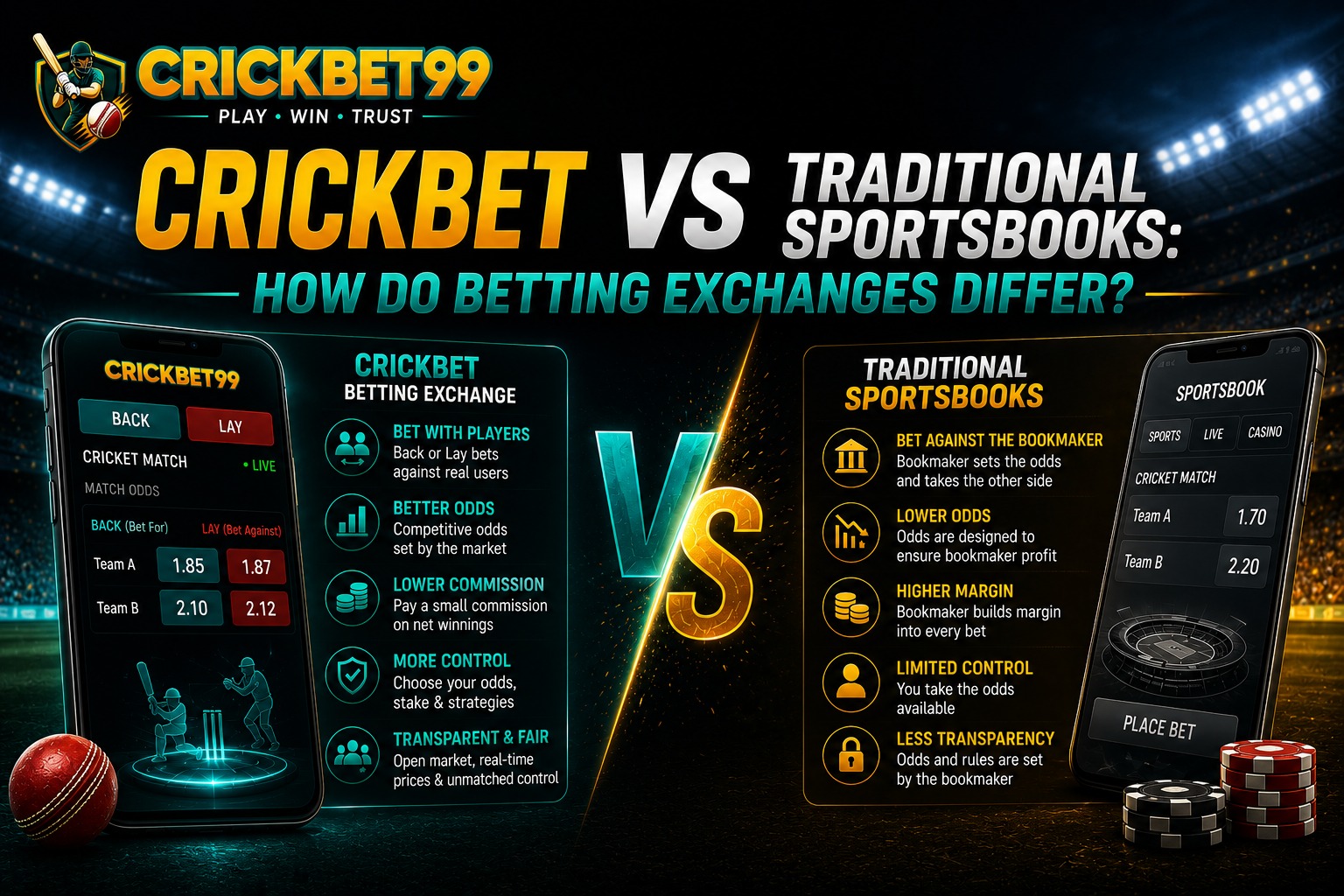
A traditional sportsbook runs on a straightforward structure. The bookmaker sets fixed odds for every match or event, and bettors wager against those odds. The sportsbook takes the opposite side of every bet and builds in a margin to stay profitable regardless of the outcome. It’s a familiar setup, and one most casual bettors are already comfortable with.
How Crickbet Works Differently
Crickbet follows an exchange-based model rather than a bookmaker model. Instead of betting against the house, users bet against other users on the platform. One person backs an outcome, another lays it, and Crickbet simply matches the two while taking a small commission on winnings. Since there’s no bookmaker margin baked into the odds, this setup often works out to better value for bettors.
Odds and Market Behavior
The clearest difference between the two shows up in how odds are set. Traditional sportsbooks fix their odds internally, while Crickbet’s odds move based on real user activity, similar to how prices shift on a trading exchange. This creates a few practical differences:
- More competitive odds since there’s no built-in house margin
- The option to back or lay an outcome, not just bet in one direction
- Greater transparency, since pricing reflects actual demand from other users
Learning the Ropes with a Crickbet Win Betting Guide
Because the exchange model works differently from a standard sportsbook, many new users start with a Crickbet win betting guide before placing real bets. These guides usually cover the basics of backing and laying, how odds shift in real time, and how to read the market before committing to a position. Taking the time to understand this upfront makes the transition from traditional betting much smoother.
Control and Risk
Traditional sportsbooks cap your risk at your stake, but the odds themselves are fixed and non-negotiable. Exchange platforms hand more control over to the user. You can set your own odds, trade out of a position before an event finishes, and adjust your approach as the market shifts. This flexibility tends to appeal more to experienced bettors, though beginners may need a bit of time to get comfortable with it.
Sports Betting: Which Approach Fits You?
Both formats fall under the broader category of sports betting, but they suit different types of users.
- If you prefer simplicity and fixed odds, a traditional sportsbook may feel more natural
- If you want better value and more control over your positions, an exchange platform like Crickbet is worth exploring
- If you bet often, understanding both models helps you decide which one fits different situations
Final Thoughts
Traditional sportsbooks and betting exchanges aren’t really competing for the exact same audience, they simply cater to different betting styles. Sportsbooks offer simple, fixed-odds wagering with very little setup involved. Crickbet, on the other hand, brings a more dynamic, market-driven approach where understanding the system, ideally with the help of a proper Crickbet win betting guide, makes a real difference in how confidently you place your bets. Once you’re comfortable with how the exchange works, the added flexibility can genuinely improve your overall sports betting experience.